


Prices on RoofSails.co.uk and BlindsAndSails.co.uk
- Tim Watkins

- Jul 22
- 5 min read
A conservatory that is too hot to sit in during summer can make every price feel urgent. Yet when comparing prices on roofsails.co.uk and blindsandsails.co.uk, the figure on its own rarely tells the full story. Conservatory roof shading is usually made to measure, so the useful question is not simply, “Which is cheaper?” It is, “What is included, how well will it suit my room, and what will it cost over time?”
A good quotation should make it easy to answer those questions. It should account for the size and shape of your roof, the fabric chosen, the installation method and the service behind the finished result. That is how you compare like for like and choose shade that makes your conservatory more comfortable without paying for features you do not need.
What shapes prices on RoofSails.co.uk and BlindsAndSails.co.uk?
Bespoke conservatory shading is not a one-size-fits-all purchase. Two rooms with the same floor area can need very different solutions because their roof layouts, directions and levels of sun exposure are different.
The first price driver is the roof itself. A straightforward rectangular or lean-to conservatory is generally simpler to measure and shade than a Victorian, Edwardian, gable-fronted or unusually shaped roof. More panels, awkward angles, roof vents and structural details can all add to the design and fitting time.
Fabric choice matters too. A light-filtering sail can soften harsh glare and improve the look of the room, while insulated fabrics are designed to offer more help with heat and light control. The right option depends on how you use the space. If the conservatory is mainly a bright breakfast room, you may prefer a lighter feel. If it becomes uncomfortable by lunchtime or is used as a home office, reducing glare and solar heat may carry more value.
Finally, check whether the price includes a survey, manufacture, professional fitting and a guarantee. A low starting figure can be less appealing if essential parts of the service appear later as extras. Equally, a higher quote may be justified where it includes a detailed site visit, a fully fitted solution and clear aftercare.
The difference between a product price and a fitted price
When comparing quotations, establish whether you are looking at a supply-only product or an end-to-end service. This is one of the biggest reasons prices can appear far apart.
A supply-only option may suit a confident DIY customer with a simple space, accurate measurements and the time to fit the shading carefully. However, conservatory roofs are visible from every angle, and small measuring errors can affect how the finished installation sits. You also need to consider access, safe working at height and the condition of the existing roof frame.
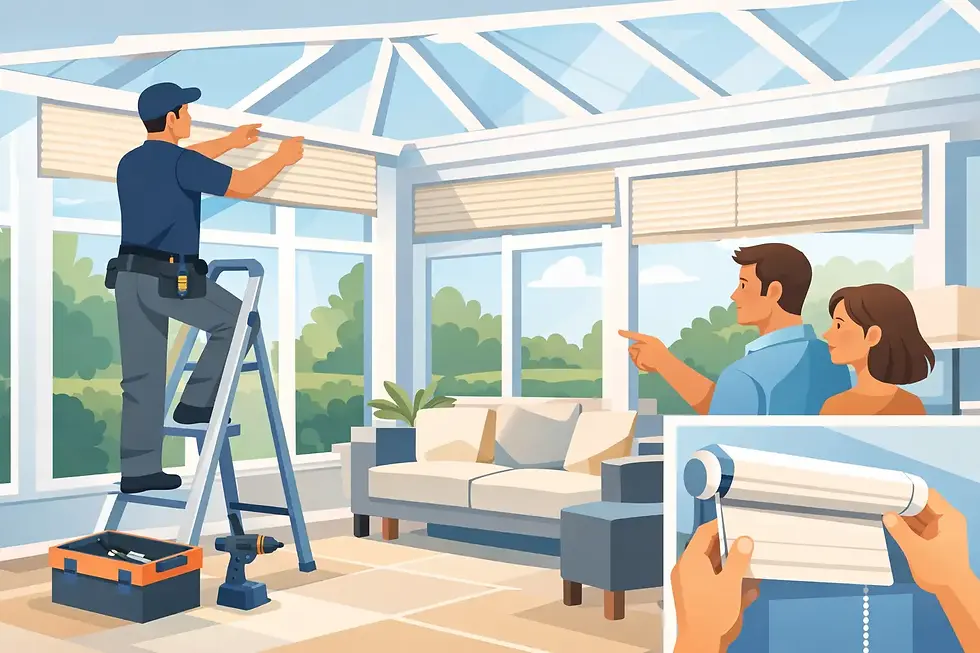
A professionally surveyed and fitted solution costs more than fabric alone, but it removes much of that responsibility. The surveyor can assess the roof shape, discuss where shade is most needed and make sure the finished sails are proportioned properly. For many homeowners, that certainty is worth more than the apparent saving of an off-the-shelf alternative.
Ask each supplier to confirm, in writing, what is included in the quoted amount. The answer should cover VAT, measuring, fitting, any travel costs, fabric and hardware, as well as the length and terms of the guarantee. It is a simple step that prevents unpleasant surprises later.
Why roof sails can offer better value than pleated blinds
Traditional pleated roof blinds can look smart, but they often involve a more complex system of tracks, cords and mechanisms. For large or awkward conservatory roofs, that complexity can increase both the initial cost and the number of components that may need attention over time.
Conservatory sail blinds take a different approach. They are custom-made fabric panels designed around the roof, creating a softer, contemporary look while providing useful shade. As a modern alternative, they can often be priced at around half the cost of conventional pleated roof blind systems, depending on the room, fabric and specification.
The value is not only about the upfront figure. Sails are designed to be easy to remove and clean, which is particularly useful in a conservatory where dust, condensation and garden debris can find their way onto roof coverings. Their simple construction also means there are fewer moving parts than many traditional blind arrangements.
That does not mean sails are automatically the best choice for every home. If you specifically want individually operated sections or precise day-to-day adjustment in each roof panel, a conventional blind system may still suit your priorities. But if your aim is attractive, fixed roof shade with less fuss and a more manageable budget, sails deserve serious consideration.
How to compare quotes fairly
Start with the same brief. Tell each provider the same information: the conservatory style, approximate dimensions, which direction it faces, when it becomes uncomfortable and whether heat, glare, privacy or appearance is your main concern. A quote based on a clear brief is far more useful than a broad estimate.
Then look beyond the total. Consider the quality and suitability of the fabric, whether the shades are made for your exact roof, how they will be fixed, and whether the company will carry out the installation. A good supplier should be happy to explain the practical reasons behind its recommendation rather than pushing the most expensive option.
Turnaround also matters. If your conservatory is becoming unusable as warmer weather approaches, a long wait can reduce the value of an otherwise attractive price. Ask when the survey can take place, how long manufacture takes and whether fitting is included in that timeframe.
Customer service is another real part of the price. Bespoke work occasionally needs a small adjustment after fitting. Knowing who to contact, what the guarantee covers and whether the installer stands behind the work can make a meaningful difference to your experience.
Questions worth asking before you decide
Before accepting a conservatory shading quote, ask whether the price includes a home survey and professional fitting, which fabric is being specified and why, and whether the sails can be removed for cleaning. It is also sensible to ask how the system will work around roof vents, opening windows and unusual roof sections.
If warmth is a concern outside summer, be realistic about expectations. Roof shading can help manage sunlight and improve comfort, but it is not a substitute for proper insulation, heating or repairs to an ageing conservatory. A trustworthy provider will explain where a sail blind will make the biggest difference rather than promising it will solve every temperature issue.
For householders looking for a made-to-measure solution, Roof Sails combines a survey, UK manufacture and professional fitting with a three-year guarantee on both product and fitting. The aim is straightforward: smart conservatory shade, fitted properly, without the inflated cost often associated with traditional roof blinds.
A better way to think about the final figure
The best price is not necessarily the lowest one shown on a page or the first estimate received. It is the price for a solution that fits your roof, deals with the problem you actually have and comes with service you can rely on.
Give each quote the same careful attention you would give any other home improvement. When fabric, fitting, guarantee and long-term maintenance are clear, you can choose with confidence - and look forward to using your conservatory when the sun is at its strongest, rather than avoiding it.


Comments