

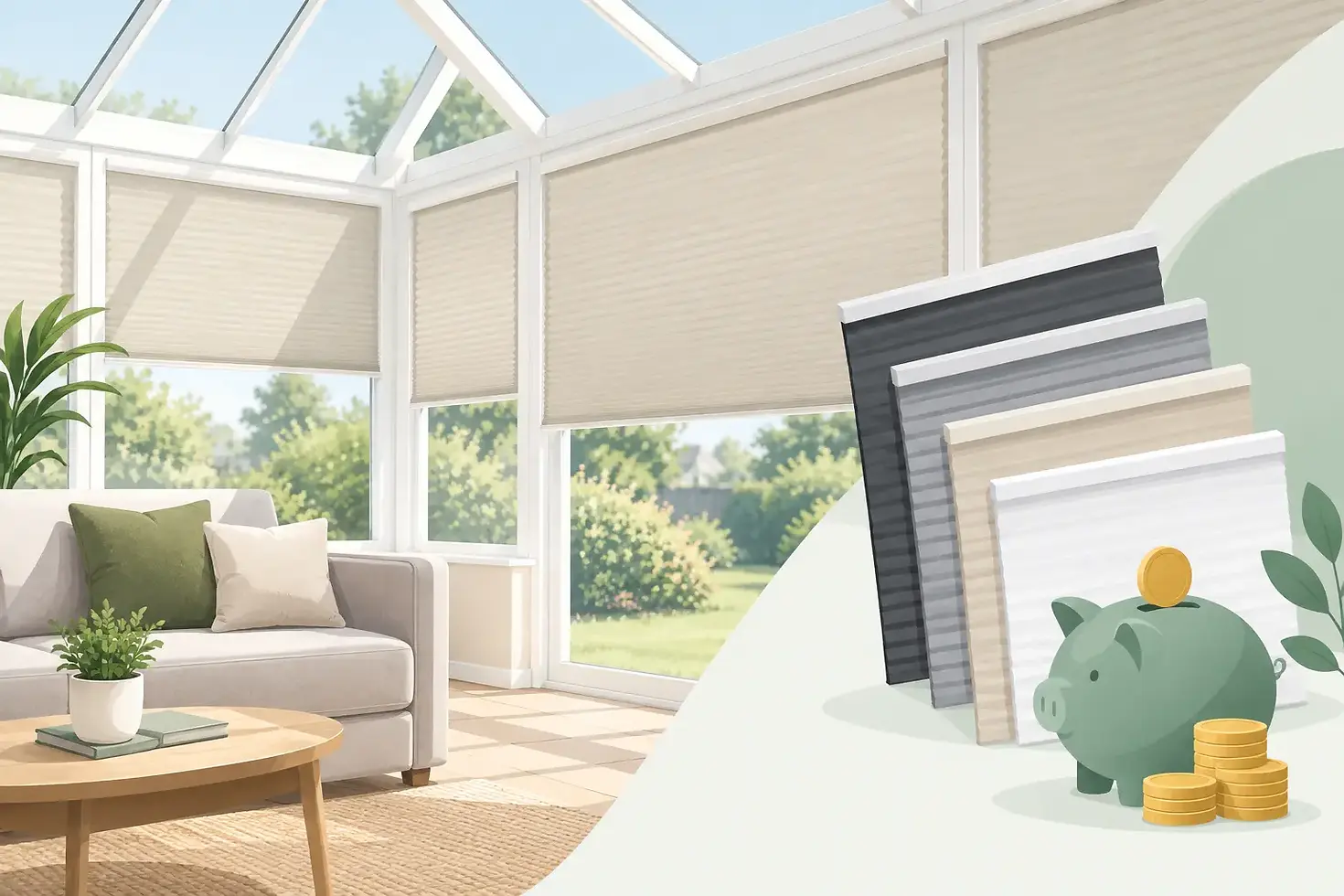
Blind Prices: Conservatory Shade Costs Explained

A conservatory that becomes too hot to use in summer can make every conversation about blind prices feel more urgent. Yet the lowest initial quote is not always the best value. The right shading should reduce glare and heat, suit the shape of your roof, look at home in the room and remain easy to live with long after fitting day.
For most homeowners, the cost comes down to a simple question: how can you make a conservatory more comfortable without paying the premium often attached to traditional roof-blind systems? Understanding what goes into the price helps you compare options fairly and choose a solution that works for your space.
What affects blind prices?
There is no single price for conservatory shading because no two conservatories are quite alike. A compact lean-to with a straightforward roof is very different from a large Victorian, Edwardian or gable-ended conservatory with multiple panels and unusual angles. The amount of fabric required, the number of sections needed and the access available for fitting can all affect the final quotation.
The material you choose also matters. A quality fabric needs to do more than look attractive. It should soften harsh sunlight, help manage heat and retain its appearance through regular use. Colours, textures and lining options can influence the cost, particularly where an insulated solution is needed for greater comfort.
Then there is the question of fitting. Made-to-measure blinds and sails require accurate measurements if they are to sit neatly and provide effective coverage. A professional survey helps identify the roof shape, fixing points and practical requirements before production begins. This prevents the frustrating gaps, uneven tension and awkward finishes that can come with a one-size-fits-all product.
Why traditional roof blinds can cost more
Conventional pleated conservatory roof blinds are often priced at the higher end of the market. They usually involve individual blind systems, specialist tracks, moving parts and a more complex installation. For a large or shaped roof, the number of separate blinds can quickly add up.
These systems may be the right choice in some rooms, especially where you need to operate individual sections every day. However, they are not the only answer to sun control. Their mechanisms can add cost and, over time, may require more attention than a simpler fabric-based solution.
This is where it pays to compare like for like. A quotation that appears cheaper may not include measuring, fitting, guarantees or the fabric quality you expect. Equally, an expensive quote is not automatically better simply because it uses a familiar blind style. Ask what is included, how the product is made and what support is available after installation.
Conservatory sail blinds: a practical alternative
Conservatory sail blinds are bespoke fabric panels fitted beneath the roof to create a clean, contemporary shaded finish. Rather than relying on a separate moving blind for each roof section, sails are designed around the shape of the space and installed as a tailored solution.
Their simplicity is a large part of their appeal. They can reduce glare and help make the room feel calmer on bright days, without filling the roof with cords, tracks or bulky mechanisms. The soft-furnishing appearance also works well in conservatories that are used as dining rooms, family rooms or relaxed spaces to enjoy the garden.
For many customers, sail blinds provide a modern alternative at around half the cost of traditional pleated roof blinds. The exact saving depends on the roof design, chosen fabric and size of the installation, but the difference can be significant. You are investing in made-to-measure shade and professional fitting, without paying for unnecessary mechanical complexity.
Insulated options and year-round comfort
If a conservatory feels particularly intense in direct sunshine, insulated sail blinds may be worth considering. The additional layer can help limit solar gain from above, making the room more pleasant during warmer periods. They also create a softer visual finish overhead, which can make a large glazed roof feel less exposed.
It is sensible to keep expectations realistic. Roof shading can improve comfort greatly, but it is not a substitute for good ventilation, suitable glazing or heating where those are needed. A south-facing conservatory with a large expanse of glass may benefit from a combination of shading, opening windows or roof vents, and appropriate temperature control.
What should be included in a fair quote?
A clear quote should not leave you guessing about the next cost. Before comparing blind prices, check whether the figure includes a survey, manufacture, installation and VAT. If fitting is treated as an extra, a low starting price can look rather different once the full work is added.
It is also worth asking about the guarantee. Bespoke shading is a home improvement purchase, not a disposable accessory, so you should know what is covered if there is an issue with the product or fitting. A company that measures and installs its own work can offer greater reassurance because one specialist takes responsibility from the first visit to the finished result.
Turnaround times matter too. If your conservatory is already difficult to use in sunny weather, you do not want a vague estimate that stretches for months. A straightforward process - survey, quotation, manufacture and fitting - makes planning much easier.
At Roof Sails, made-to-measure conservatory sails are manufactured in the UK, professionally fitted and supplied with a three-year guarantee on both product and fitting. Free quotations and fitting mean customers can focus on the complete cost rather than trying to piece together separate charges.
How to compare blind prices without compromising on quality
The most useful comparison is based on the finished installation, not the headline number. Consider how much of the roof will be shaded, whether the design has been tailored to your conservatory and what the fabric is expected to achieve. A carefully fitted sail that improves everyday comfort can offer far better value than a cheaper product that leaves large areas exposed.
Think about maintenance as well. Conservatory roofs attract dust, and any shading solution needs to be practical to keep clean. Sail blinds are designed to be easy to remove for cleaning, which is a genuine benefit in busy homes. Traditional systems with fixed tracks and multiple components can be more difficult to access and maintain.
Appearance should not be an afterthought. The right colour can brighten the room, complement existing furnishings or create a more relaxed atmosphere. Pale shades often keep the look light and airy, while warmer or deeper tones can add character. The best choice depends on how you use the room and how much natural light you want to retain.
Questions worth asking before you decide
Before accepting a quotation, ask whether the shade is made for your exact roof dimensions, whether the price includes fitting and what guarantee comes with the work. You should also ask how the product is cleaned, whether it can be removed when needed and how long the process is likely to take.
These questions are not about making the purchase complicated. They simply make sure you know what you are paying for. A dependable specialist will explain the options clearly and recommend a solution based on your room, rather than pushing the most expensive system.
Value is about comfort, not just cost
The best conservatory shading gives you more use from a room you already own. It can make breakfast in bright morning sunshine more comfortable, cut down on screen glare when you are working from home and help the space feel less oppressive when the temperature rises.
Blind prices will always vary according to the size and complexity of your conservatory. But a bespoke sail solution can be a sensible middle ground: attractive, professionally fitted, easier to maintain and considerably more affordable than many traditional roof-blind systems. Start with a clear quote for your own roof, then choose the option that will make the room somewhere you genuinely want to spend time.


Comments