


Conservatory Shade Sails That Actually Work
- Tim Watkins

- Jun 12
- 6 min read
If your conservatory feels bright and inviting in spring but turns into a greenhouse the moment the sun shows up, you are not imagining it. Conservatory shade sails are designed to tackle exactly that problem - cutting glare, softening harsh light and making the room far more comfortable to use without the heavy cost or fussy look of older blind systems.
For many homeowners, the issue is not just heat. It is the way a conservatory becomes awkward to enjoy for large parts of the day. Screens are hard to see, furniture fades, meals get interrupted by low sun and the room you paid to add to your home ends up feeling seasonal rather than usable. A well-made shade sail changes that quickly, and the difference is often more noticeable than people expect.
Why conservatory shade sails have become a popular alternative
Traditional pleated roof blinds have been the default choice for years, but they are not always the best fit for modern households. They can be expensive, they can be fiddly to maintain and, depending on the design, they do not always give the clean, softer finish that people want in a living space.
Conservatory shade sails offer a simpler approach. Rather than trying to cover every section with a more mechanical blind system, they create tensioned fabric panels across the roof area to reduce direct sunlight and improve comfort below. The effect is practical first, but it also changes the look of the room. The roof feels calmer, the light is more balanced and the conservatory starts to feel more like part of the home.
That is a big part of their appeal. People are not only looking for shade. They want something that looks considered, suits the room and does not feel like an overcomplicated add-on.
What conservatory shade sails actually do
The first benefit most people notice is a reduction in glare. If your conservatory is used for reading, eating, working or simply relaxing, glare can be just as irritating as heat. Bright overhead light can make the room uncomfortable even when the temperature is manageable. Shade sails diffuse that light, which makes the space easier on the eyes and more pleasant to spend time in.
Heat control is the next major gain. No internal shading system can perform exactly like an external product because the sun has already passed through the glazing, but that does not mean internal sails are a small improvement. In real homes, they can make a marked difference to how hot the room feels and how usable it remains during warmer weather.
They also help protect interiors. Strong sunlight can bleach flooring, fabrics and furniture over time. If your conservatory includes dining chairs, sofas, rugs or soft furnishings, filtering light is about protecting that investment as much as improving comfort.
Then there is the visual side. A bespoke sail system can soften the hard, angular feel of a glazed roof. That matters more than it might sound on paper. Conservatories often have plenty of light but not always much visual warmth. Fabric panels add texture and make the room feel more finished.
Bespoke fit matters more than most people think
This is not a product category where close enough usually works. Conservatory roofs vary hugely in shape, size and panel layout, and a shading solution that is not properly measured can look untidy or perform poorly.
A made-to-measure approach means the sails are designed around the exact roof structure rather than forced into a standard format. That gives a neater result and avoids the common problems of sagging fabric, awkward gaps or a finish that looks temporary. It also means the final installation complements the room rather than fighting against it.
For homeowners comparing options on price alone, this is worth keeping in mind. A cheaper off-the-shelf answer can look appealing at first, but if it never sits right or does not genuinely improve comfort, it becomes a false economy. Good shading should feel like part of the conservatory, not an afterthought.
Are shade sails better than pleated roof blinds?
In some homes, yes. In others, it depends on what matters most to you.
If you want a softer, more contemporary look, easier maintenance and a more cost-effective route to reducing heat and glare, shade sails are often the stronger choice. They are especially appealing to people who have been put off by the cost of pleated roof blinds or who do not want a system with more moving parts and more cleaning difficulty.
Pleated blinds may still suit homeowners who want a more segmented, traditional blind appearance or who are replacing an existing like-for-like system. But many people are now reassessing whether they need to pay premium prices for that older style when a bespoke sail can achieve the practical result they actually want.
The better question is often not which option is more established, but which one gives you the best mix of appearance, performance and value for your room.
What to look for in conservatory shade sails
Not all products in this space are equal, and the details matter. Fabric quality makes a difference both to appearance and longevity. A properly chosen material should look smart, hang well and stand up to daily domestic use without becoming a maintenance burden.
Ease of cleaning is another point that deserves more attention than it usually gets. Conservatories collect dust and airborne marks more readily than many other rooms, so a shading solution that can be removed and cleaned simply is a practical advantage, not a small extra.
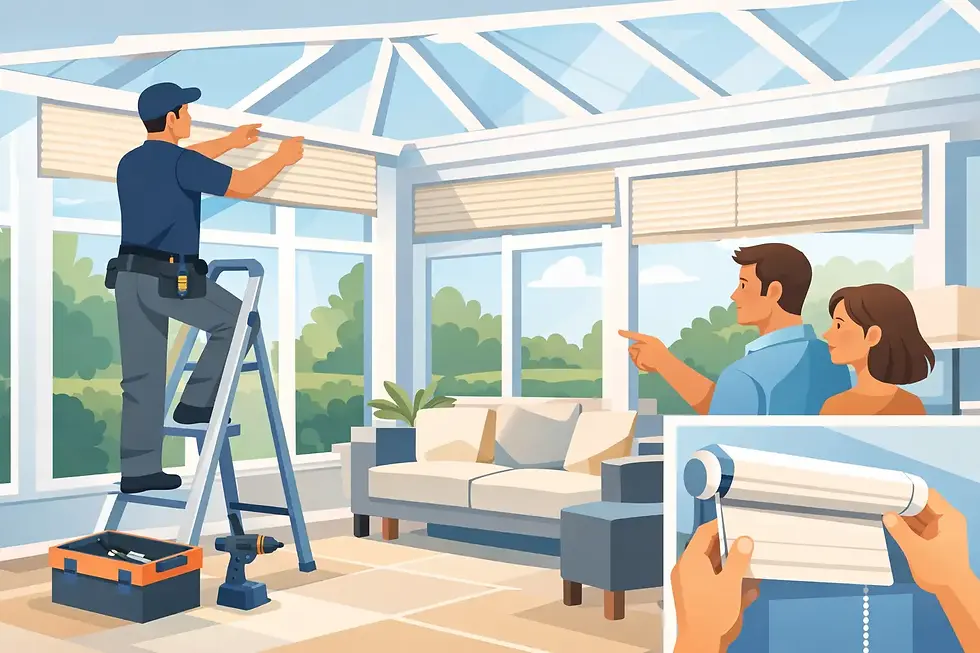
Fitting matters as much as the fabric. A professional installation gives the sails the right tension, the right alignment and the right overall finish. That is where specialist experience really shows. A well-fitted system looks simple, but achieving that clean result takes know-how.
Guarantees and service also count. If you are investing in a bespoke product, you want confidence that both the item and the fitting are backed properly. Good suppliers make the process straightforward from survey to quotation to installation, and that reassurance is part of the value.
A practical solution for year-round use
A lot of conservatories become underused because they are treated as summer rooms when they could be much more. Shading helps make the room feel balanced across more of the year. In warmer months, it reduces the harshness that drives people out. In brighter colder months, it can still soften light and make the space feel more comfortable and settled.
That does not mean shade sails are a cure-all for every temperature issue. If a conservatory has broader insulation problems, those may still need addressing. But for many homeowners, the biggest day-to-day frustration is excessive sun and glare, and that is exactly where sails can have a strong impact.
They also work well in spaces beyond the home. Offices, waiting areas and workplace conservatories can suffer from the same problems of overhead brightness and heat build-up. In those settings, shade sails offer a practical soft-furnishing-style solution that improves comfort without making the space feel closed in.
Why value matters here
Home improvements are rarely judged on looks alone. People want something that works, lasts and feels worth the money. That is one reason bespoke sail blinds have gained attention. They can offer a polished, modern finish at a significantly lower cost than more traditional alternatives.
Affordability should not mean compromise, though. The best-value solution is the one that solves the problem properly, is easy to live with and still looks right months and years later. A product that is attractively priced but awkward to maintain or disappointing in use will not feel like good value for long.
That is why service matters alongside product design. A clear quote, accurate survey, professional fitting and dependable aftercare all reduce hassle for the customer. Roof Sails has built its offer around that idea - bespoke shading that looks smart, performs well and stays within reach for homeowners who want a practical upgrade rather than an inflated bill.
Is a conservatory shade sail right for your home?
If your conservatory is too bright, too hot or simply not as comfortable as it should be, the answer is very often yes. The strongest candidates are rooms that get heavy sun exposure, spaces with expensive or delicate furnishings and conservatories that are visually sharp or stark without any softening element overhead.
It is especially worth considering if you have already looked at pleated roof blinds and felt the price was hard to justify. Many homeowners are surprised to find that a bespoke sail system gives them the improvement they wanted all along, with less complexity and a more relaxed, modern appearance.
The key is choosing a made-to-measure solution installed by a specialist who understands both the product and the room. When that part is handled properly, conservatory shade sails do not just reduce sunlight. They help turn an awkward space back into a room you genuinely want to use.


Comments