

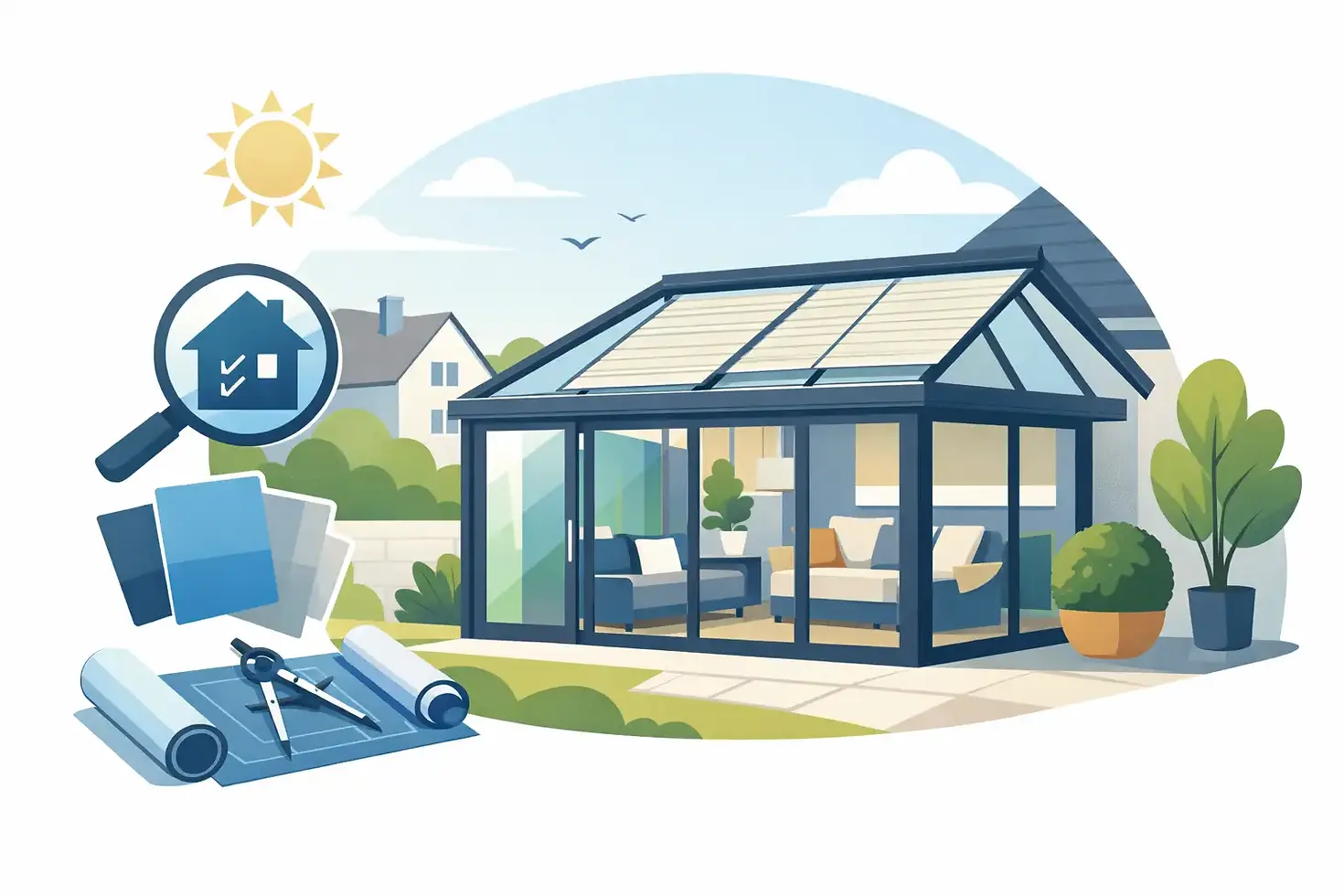
Conservatory Shading Buyer Guide for UK Homes
- Tim Watkins

- Jul 21
- 5 min read
A conservatory that is too hot to use in July, uncomfortably bright at breakfast or chilly when the sun drops is not a failed room - it is a room asking for the right shade. This conservatory shading buyer guide will help you compare the main options, understand where the real value lies and choose a solution that suits your roof, budget and the way you want to use the space.
Start with the problem you want to solve
Conservatory shading is not a one-size-fits-all purchase. A south-facing room with a glass roof may need serious glare and heat control, while a north-facing conservatory may simply need softer light and a more finished look. If you use the room as a dining area, home office or playroom, privacy and screen glare may matter as much as temperature.
Be clear about the times of day when the room becomes uncomfortable. Morning sun, afternoon heat and low evening glare each behave differently. Also consider whether the issue is mainly through the roof, the side glazing or both. Roof shade is often the biggest improvement because that is where direct overhead sun has the greatest effect.
A shading system will make the room feel calmer and more usable, but it cannot turn a lightly built conservatory into a fully insulated extension. The honest answer is that performance depends on the glazing, orientation, ventilation and how much heat is already entering the room. Good shading is one very practical part of a more comfortable space.
The main conservatory shading choices
Traditional pleated roof blinds remain familiar to many homeowners. They fit within the roof structure and can look neat when professionally specified. However, they are usually the more expensive route, particularly for large, awkward or multi-panel roofs. Their cords, tracks and moving parts also mean there is more to maintain over time.
Conservatory sail blinds take a different approach. Fabric panels are made to fit beneath the roof, creating a clean, contemporary canopy effect. They reduce harsh light, soften the appearance of the glazing and can help take the edge off solar heat. Because they use less complex hardware than conventional pleated blind systems, they can offer a more affordable made-to-measure alternative.
Roof films are another option, applied directly to the glass. They can reduce glare and solar gain, but they alter the view through the roof and are less useful if you want a warmer, softer interior finish. Once fitted, they are not something you remove for a change of season or a different look.
External awnings and roof shading can perform well because they stop some sunlight before it reaches the glass. The trade-off is a higher level of exposure to weather, plus the need for suitable fixing points and ongoing care. They can be a strong choice in certain properties, but they are not always the simplest or most cost-effective answer.
For many homes, the best choice is not the system with the longest feature list. It is the one that solves the actual problem without creating a costly, complicated installation.
What to look for in a conservatory shading buyer guide
Made-to-measure fitting is worth it
Conservatory roofs are rarely straightforward. Victorian, Edwardian, lean-to, gable and shaped designs all have different angles, bars and measurements. A made-to-measure system should follow the roof layout properly, rather than leaving distracting gaps or looking like an afterthought.
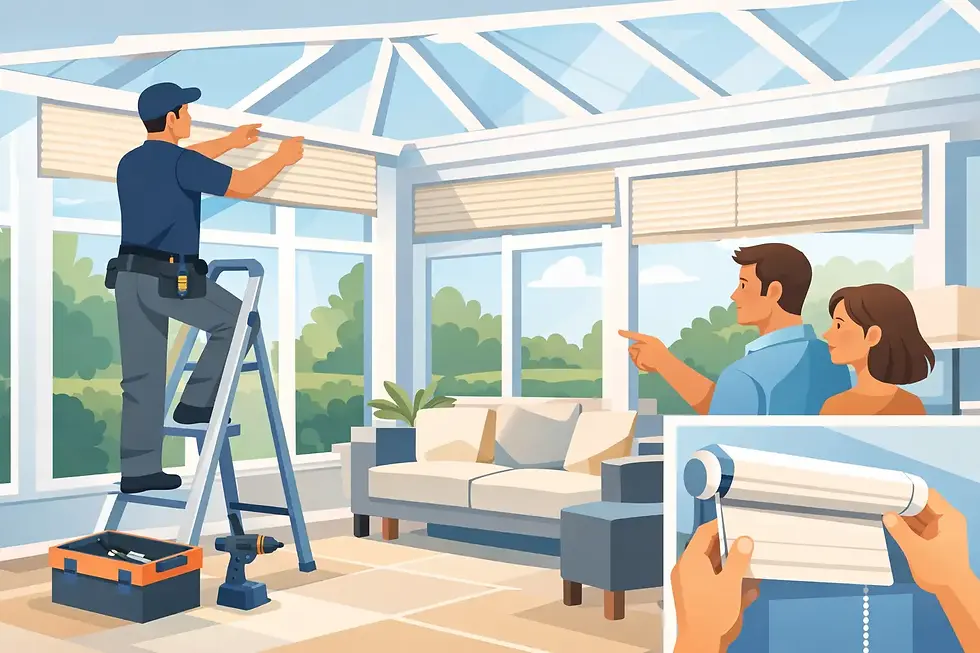
A survey before manufacture is particularly valuable. It confirms the fabric layout, fitting positions and practical access, while giving you the chance to discuss how much coverage you want. Full roof coverage is often best for heat and glare, but partial shading can suit rooms where preserving maximum daylight is the priority.
Choose fabric for the room, not just the swatch
Colour matters, especially in a room with so much glass. Lighter shades tend to keep the space feeling open and airy, while deeper tones can create a more dramatic, cosy effect. Yet appearance is only part of the decision. Ask how the fabric handles light, whether it can be cleaned easily and how it will sit alongside your existing furniture and window treatments.
The right fabric should feel at home in the room without making it gloomy. In a conservatory used every day, practical care matters too. Removable sail blinds are easier to take down for cleaning than intricate blind systems fixed permanently across each roof panel.
Think about access and everyday use
A roof blind may look impressive on day one, but consider what happens when it needs cleaning, adjustment or repair. Systems that rely on numerous cords and tracks can be harder to maintain, especially on high or complex roofs.
Sail-style shading is designed to be straightforward. It remains in place to provide a soft shaded canopy, and can be removed when required. That suits homeowners who want a polished result without having to operate multiple blinds every time the sun moves.
Comparing price fairly
The cheapest quote is not always the lowest-cost choice. Compare what is included: survey, manufacture, professional fitting, fabric quality, guarantee and any call-out costs that might arise later. A low initial figure can become less attractive if measuring, installation or aftercare are added separately.
Traditional pleated roof blinds are often priced at a premium due to their bespoke tracks, mechanisms and individual roof sections. Bespoke conservatory sails can provide a similar level of tailored coverage and visual impact for considerably less. In many cases, a professionally fitted sail solution can be around half the cost of conventional pleated roof blinds, depending on the roof design and specification.
That does not mean every sail is automatically the right answer. If you need independent control over each roof section, a tracked blind system may be more suitable. But if your priority is attractive, fixed overhead shade with less fuss and better value, sails deserve serious consideration.
Do not overlook fitting and guarantee
A well-made product can still disappoint if it is poorly fitted. Roof shading needs accurate tension, secure fixings and a layout that works with the conservatory structure. Professional fitting also avoids the uncertainty of drilling into roof bars or trying to measure difficult angles from a ladder.
Ask who will carry out the survey and installation, what the turnaround is likely to be, and what happens if an adjustment is needed. A clear guarantee gives useful reassurance, but check that it covers both the product and fitting rather than fabric alone.
Roof Sails provides made-to-measure conservatory sail blinds with a free quote, professional fitting and a three-year guarantee on both product and fitting. That kind of end-to-end service is especially useful when you want a straightforward project rather than another job to manage yourself.
Questions to ask before you buy
Before choosing a supplier, ask whether the shade is made specifically for your roof, how it will be fitted, how easy it is to remove and clean, and what is included in the quoted price. Request examples of similar roof styles where possible, as this gives a better idea of proportion and finish than a fabric sample alone.
It is also worth asking how the system will affect light during winter. Most homeowners want relief from strong summer sunshine without making the conservatory feel closed in for the rest of the year. A thoughtful fabric and layout choice can maintain a bright feel while cutting the glare that stops you enjoying the room.
Your conservatory should not be reserved for the few mild days when the weather happens to cooperate. Choose shading that suits the way you live, is fitted properly and feels like part of the room, and you will have a space that is far easier to enjoy throughout the year.


Comments