

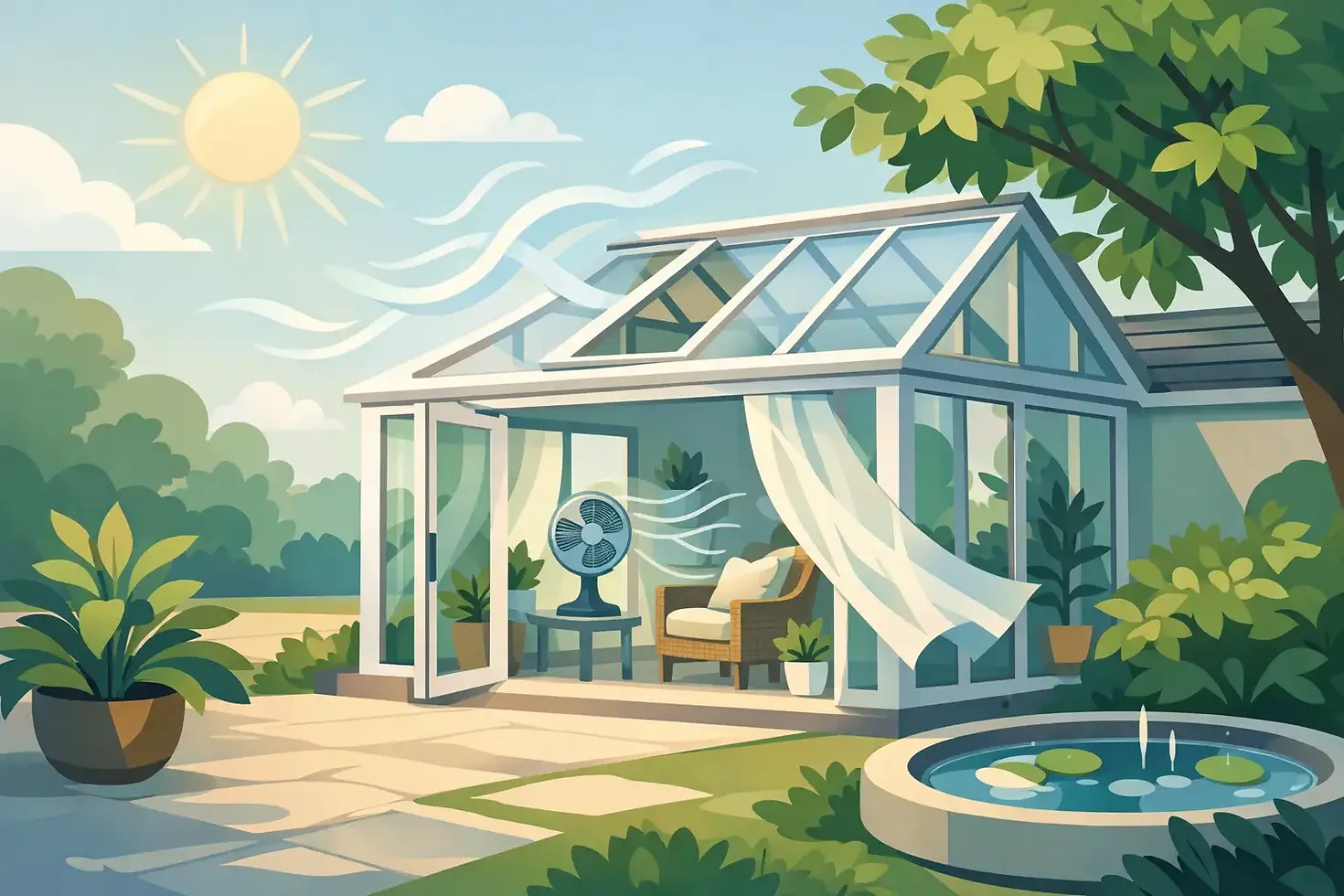
How to Cool a Conservatory Naturally
- Tim Watkins

- Jun 25
- 6 min read
By mid-afternoon on a warm day, a conservatory can go from pleasant to unbearable far too quickly. If you are searching for how to cool conservatory naturally, the good news is that you do not always need air conditioning or expensive building work. In many cases, the biggest improvements come from reducing solar gain, improving airflow and choosing shading that works with the space rather than against it.
The trick is to stop heat building up in the first place. Once the room is already baking, opening a door alone often will not do much. Glass roofs and large glazed areas are brilliant for light, but they also turn a conservatory into a heat trap unless that light is properly managed.
Why conservatories get so hot so fast
A conservatory is designed to let in daylight from multiple angles, which is exactly why it can feel so bright and inviting. It is also why summer heat can become a problem. Sunlight passes through the glass, warms the surfaces inside the room, and that heat lingers. Roof glazing is usually the main culprit because it takes the strongest sun for the longest part of the day.
That means the most effective natural cooling methods are usually the ones that tackle the roof first, then support that with better ventilation and a few sensible changes to how the room is used. If you only focus on one part of the problem, results can be disappointing.
How to cool a conservatory naturally by blocking heat at the source
If you want a conservatory that stays usable in summer, shading is the first thing to get right. Natural cooling is less about creating cold air and more about preventing excess heat from entering.
Roof shading makes a noticeable difference because it cuts direct sunlight before it can dominate the whole room. That helps reduce glare, lowers the temperature feel of the space and makes furniture, flooring and screens more comfortable to use. It also tends to improve the look of the room, especially if the existing space feels too stark or exposed.
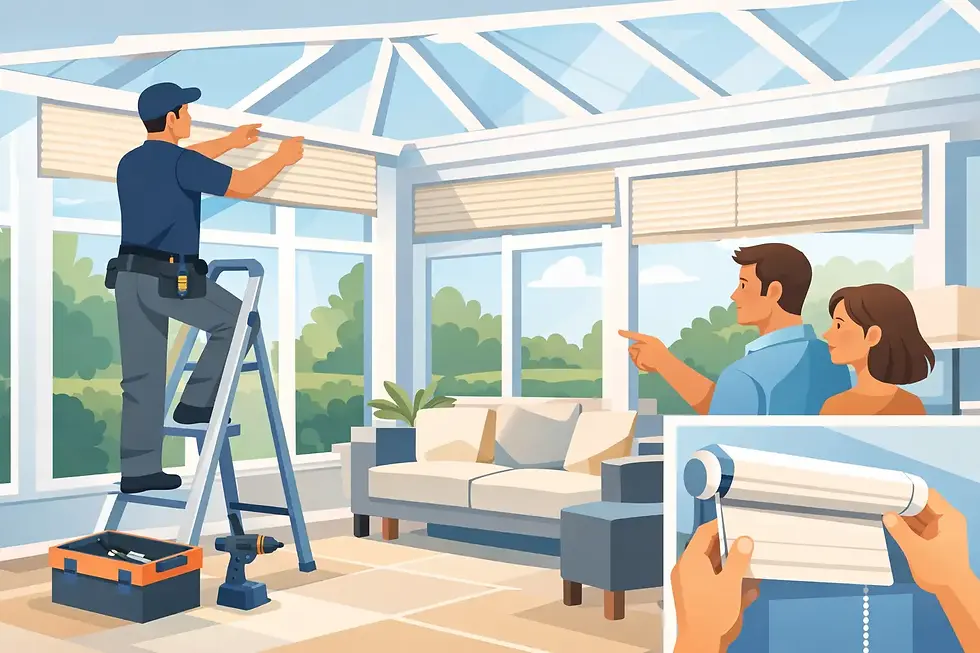
Traditional pleated roof blinds have been a common option for years, but they are not the only route. Many homeowners now want something that looks softer, feels more modern and does not come with the same price tag or maintenance headaches. Made-to-measure conservatory sail blinds are a strong alternative because they create shade where it matters most, soften the light rather than blacking it out, and can be removed for cleaning more easily than more complex systems.
This is where a bespoke fit matters. Off-the-shelf solutions often leave gaps, sag over time or simply fail to suit awkward roof shapes. A properly measured and fitted shading system will do a far better job of reducing heat build-up, and it will look like part of the room rather than an afterthought.
Ventilation still matters, but timing matters more
Opening windows is the obvious move, but it only works well when you do it at the right time. If you open everything during the hottest part of the day, you may just be letting in warmer air. A better approach is to ventilate early in the morning while the outdoor temperature is lower, then use shading to slow heat gain as the day warms up.
Cross-ventilation usually gives the best results. That means creating airflow from one side of the conservatory to another, rather than opening a single window and hoping for the best. If your conservatory has roof vents, side windows and doors, use them together to encourage warm air to rise and escape.
It does depend on the orientation of the room and local conditions. A conservatory that faces south or west will usually need more help with solar control than one that gets gentler morning light. If the space is exposed and catches a breeze, ventilation may be more effective. If it is enclosed by neighbouring walls or fencing, shading will do more of the heavy lifting.
Soft furnishings can help, if you choose the right ones
Not every natural cooling measure has to involve structural changes. The right fabrics can make the room feel less harsh and more balanced, particularly when they reduce glare and stop the sun hitting interior surfaces directly.
That said, standard window dressings often solve only part of the problem. Side blinds or curtains may help on vertical glazing, but they do little for the roof where much of the heat enters. For many conservatories, this is why people still end up with a room that looks dressed but feels too hot.
A layered approach often works best. Roof shading does the main job, and side-window treatments can support it when the sun is lower in the sky. The result is a cooler-feeling room without shutting out all the natural light that made the conservatory appealing in the first place.
Simple changes that reduce heat build-up indoors
Once direct sun is controlled, a few smaller adjustments can improve comfort further. Pale furnishings reflect more light than dark ones, which can slightly reduce how much heat the room seems to hold. Rugs, cushions and upholstered furniture can also make the space feel less stark and less glaring, even if they are not lowering the temperature in a technical sense.
Try to avoid adding unnecessary heat during the hottest hours. Lamps, electronics and even cooking appliances in an open-plan adjoining space can all contribute. If you use the conservatory as a home office or family room, moving the most heat-generating activities earlier or later in the day can help.
Houseplants are often suggested as a natural cooling solution. They can improve the feel of the space and add softness, but they are not a fix for serious solar gain. Think of them as a finishing touch, not the answer.
How to cool conservatory naturally without making it too dark
One of the biggest concerns homeowners have is losing the brightness they enjoy. That is a fair concern. Some cooling solutions create such heavy shade that the room no longer feels like a conservatory at all.
The better options reduce glare and harsh overhead sun while still allowing diffused daylight through. This is especially useful if the room is used for reading, dining or working from home. You want less heat and less squinting, not a gloomy space.
This is why design matters as much as function. A shading system should work with the shape of the roof and the style of the room. It should look tidy, feel easy to live with and give you practical control over the space. Natural cooling should make the conservatory more usable, not turn it into a compromise.
When natural cooling is enough, and when it is not
For many conservatories, natural methods make a substantial difference. If your main issue is summer overheating, well-planned shading and ventilation may be all you need. The room will feel calmer, glare will drop and day-to-day comfort improves without relying on powered cooling.
There are limits, though. If the conservatory has poor existing glazing, no meaningful opening vents, or full sun exposure all day, natural measures may need to be part of a wider upgrade plan. You can still improve things significantly, but expectations should be realistic. On the hottest days of the year, no glass-heavy room will feel identical to a fully insulated extension.
That is why honest advice matters. The aim is not to promise miracles. It is to choose the changes that deliver the best return in comfort, appearance and value.
The most effective natural fix is usually the one you notice every day
People often start by searching for quick tricks, and some do help around the edges. But if your conservatory is regularly too hot, the most worthwhile change is usually the one that tackles heat at roof level in a practical, attractive way. That gives you a room you can actually use more often, rather than one you avoid whenever the sun appears.
For homeowners who want a more affordable, made-to-measure alternative to older blind systems, Roof Sails offers a straightforward route to better shade, less glare and a more comfortable conservatory without overcomplicating the process.
A conservatory should feel like part of your home, not the room you give up on each summer. If you focus on shading first, support it with smart ventilation and keep the solution tailored to your space, natural cooling can make a bigger difference than most people expect.


Comments