


How to Shade a Conservatory Roof Properly
- Tim Watkins

- Jun 21
- 6 min read
If your conservatory is lovely in spring but unbearable by the first warm spell, the roof is usually the reason. Knowing how to shade a conservatory roof properly makes the difference between a room you avoid for half the year and one you actually use. The right solution can cut glare, soften harsh sunlight and help the space feel more comfortable without making it dark and heavy.
A lot of homeowners start by looking at quick fixes. Temporary films, lightweight curtains and off-the-shelf blinds can all seem appealing at first because they promise a fast answer. Sometimes they help a little, but conservatory roofs are awkward shapes, the sun moves throughout the day, and heat build-up is often more stubborn than people expect. That is why roof shading works best when it is chosen around the way your conservatory is built and how you want to use the room.
How to shade a conservatory roof without making it gloomy
The common worry is simple - if you block the sun, will you spoil the room? In most cases, no. Good roof shading is not about shutting daylight out completely. It is about controlling it. The aim is to reduce direct glare and harsh solar gain while still keeping the open, bright feel that makes a conservatory appealing in the first place.
That balance depends on the material, the fit and the amount of coverage. A very heavy or badly positioned system can make a conservatory feel closed in. A lighter, made-to-measure option tends to soften the light rather than remove it, which is usually what people want for dining, reading, working or simply sitting comfortably during the afternoon.
If privacy is your main concern, roof shading can help there too, but it is usually chosen first for heat and glare. If overheating is the problem, the best results come from shading that sits where the sun is strongest and covers the glazed roof area accurately.
The main options for conservatory roof shade
There is no single answer to every conservatory. Victorian, Edwardian, lean-to and bespoke designs all behave a little differently in sunlight. So when people ask how to shade a conservatory roof, the honest answer is that it depends on your roof shape, budget and expectations.
Pleated roof blinds are one of the more traditional choices. They can look neat when first installed and offer a fitted appearance, but they are often one of the more expensive routes. They can also be fiddly to maintain, especially in roof spaces where dust and insects build up over time. If you have a large conservatory, the overall cost can climb quickly.
Window films are another option people consider. These can reduce glare to a degree, but they are not always enough on their own when the real issue is intense heat pouring through the roof all day. Films also change the look of the glass permanently, which some homeowners are happy with and others are not.
Internal curtains or side blinds can help around the edges of the room, but they do less for the main source of heat when the roof itself is taking the full force of the sun. They are better as part of the overall picture than as the whole solution.
For many homeowners, conservatory sail blinds are a more practical middle ground. They are designed to sit below the roof, soften the light, reduce glare and improve comfort, while keeping a clean, modern look. Because they are made to measure, they suit awkward roof sections far better than one-size-fits-all alternatives. They also tend to be easier to remove and clean than more complex blind systems, which matters in a room that sees changing temperatures through the year.
What actually matters when choosing a roof shading solution
Price matters, of course, but it should not be the only deciding factor. A cheaper temporary option that does very little can end up being poor value, while a more tailored solution can save frustration and make the room far more usable.
Start with the practical question: what bothers you most? If the room is too bright to watch television or work on a laptop, glare control should lead the decision. If the room is simply too hot to sit in, focus on how much coverage and light diffusion the shading provides. If you want the room to feel cosier in cooler months as well, insulated materials may be worth considering.
Appearance matters as well. Conservatories are visible spaces. Anything fitted overhead becomes part of the room design, so the fabric and finish need to suit the rest of the space. A shading system should solve a problem, but it should also look like it belongs there.
Then there is ease of ownership. Some systems look smart on day one but become awkward to live with. If the blinds are difficult to clean, difficult to remove or prone to looking tired quickly, that will wear thin. Homeowners usually want something straightforward - effective shade, tidy lines and minimal fuss.
How to shade a conservatory roof the smart way
The smartest approach is normally to avoid guessing. Conservatory roofs vary more than people realise, and measurements need to be right if you want a neat finish and reliable coverage. That is why bespoke roof shading so often outperforms DIY alternatives.
A made-to-measure system is shaped around the roof rather than forced into it. That means better coverage, a cleaner appearance and fewer of the gaps that let strong sunlight through exactly where you do not want it. It also avoids the homemade look that can come with trying to adapt standard blinds to a roof that was never designed for them.
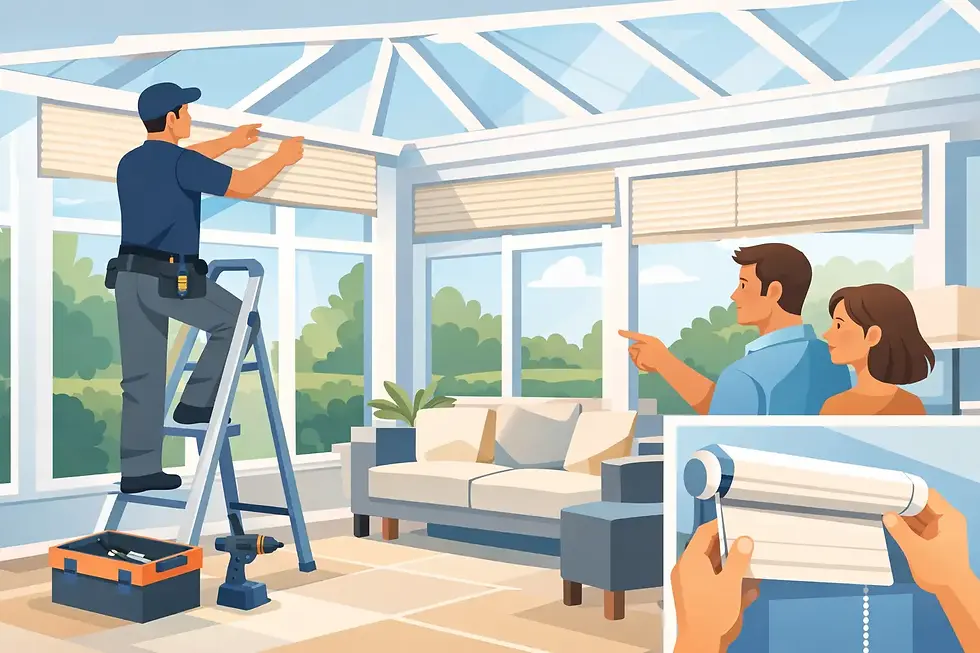
Professional fitting helps for the same reason. Conservatory roofs are high, angled and often awkward to work on safely. A proper survey takes the guesswork out of the process and usually prevents the small measuring errors that become obvious once the sun starts moving across the roof.
For homeowners looking for a modern alternative to pleated systems, sail blinds make particular sense. They offer a softer, more contemporary finish and can be excellent value, especially when compared with the cost of traditional roof blind installations. That combination of bespoke fit, simpler maintenance and lower overall cost is exactly why more people are now choosing this route.
When insulation should be part of the conversation
Not every customer needs insulated roof shading, but for some conservatories it is well worth considering. If the room is roasting in summer and unwelcoming in cooler months, standard shade alone may only solve half the issue.
Insulated conservatory sail blinds can help moderate the room more effectively by reducing the intensity of the sun and adding another layer between the glass and the living space. They are not a substitute for a fully insulated roof conversion, but they can make a noticeable difference for a fraction of the upheaval and cost.
That is often the better fit for households who still want to keep the look and feel of a conservatory, rather than turning it into a conventional extension. You keep the character of the room, but make it much more practical day to day.
The value of getting the right solution first time
People often spend more than they need to because they try two or three partial fixes before choosing the thing that actually works. If you have already bought temporary blinds, added reflective film and still find the room uncomfortable, that pattern will sound familiar.
A well-fitted roof shading system is usually worth more than a string of smaller purchases that never quite solve the problem. The best solutions are the ones that look right, do the job properly and do not ask much from you once they are installed.
That is where specialist help matters. A company focused on conservatory roof shade will understand the awkward angles, the light patterns and the practical questions homeowners ask every day. Roof Sails, for example, builds its service around made-to-measure shading that is designed to be attractive, affordable and easy to live with, which is exactly what many conservatory owners are searching for.
So, what should you choose?
If you want the simplest answer to how to shade a conservatory roof, choose a solution that is tailored to the roof, softens rather than blocks light, and gives you long-term comfort without turning maintenance into a chore. For most homeowners, that points away from makeshift fixes and towards bespoke internal roof shading.
The right choice is rarely the flashiest one. It is the one that makes the room easier to enjoy on bright mornings, hot afternoons and everyday family use. When your conservatory feels calm, comfortable and properly finished, you stop thinking about the roof and start using the room the way you meant to all along.


Comments