


How to Prepare a Conservatory for Survey
- Tim Watkins

- Aug 1
- 6 min read
A conservatory survey should feel straightforward, not disruptive. When you prepare a conservatory for survey before your appointment, the specialist can focus on the details that matter: how the room is used, where heat and glare cause problems, and how a made-to-measure shade will sit within your roof. A little preparation also makes the visit quicker and helps produce a more accurate quotation.
Why preparation makes a difference
Conservatories are rarely identical. Roof shapes, support bars, roof vents, doors, furniture layouts and the direction the room faces all affect the best shading solution. A survey is not simply a matter of taking a few measurements. It is the point at which practical use, appearance and budget are considered together.
For example, a south-facing conservatory may become uncomfortable by late morning in summer, while a west-facing room may be pleasant for most of the day but difficult to use in the evening because of low sun and glare. A room used as a dining area may need a different balance of light and shade from a home office or a playroom. Sharing these details helps the surveyor recommend a design that suits the space rather than a one-size-fits-all option.
Preparing properly also allows clear access to the roof area and the fixing points. This is particularly useful for conservatory sail blinds, which are made to fit the individual roof and need careful positioning for a neat, balanced finish.
Prepare a conservatory for survey in five simple steps
1. Clear the area beneath the roof
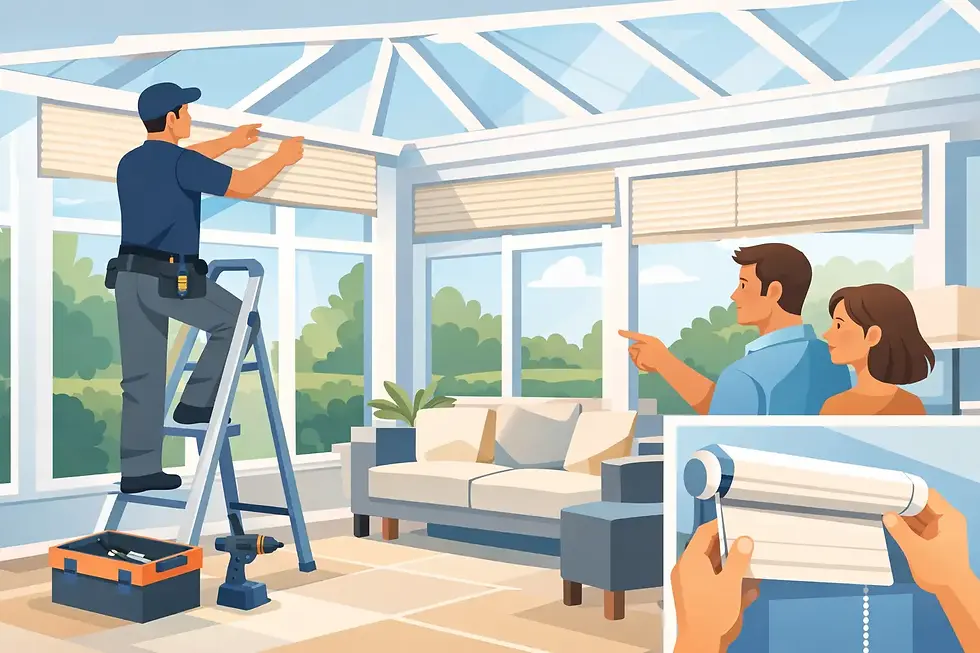
Move lightweight furniture, plants, lamps and ornaments away from the centre of the room where possible. The surveyor will need to see the full roof structure, inspect the supporting framework and take accurate measurements from several positions.
There is no need to empty the whole conservatory. A large sofa, dining table or fitted furniture can often stay where it is, but make enough room to safely use a step ladder and move around the perimeter. If you have fragile items on shelves or side tables, put them somewhere safe before the visit.
Clear access is also a safety issue. Loose toys, pet beds, trailing cables and rugs that slide underfoot can make measuring more difficult than it needs to be. A clear floor helps the appointment run smoothly and protects your belongings.
2. Make note of the problems you want to solve
Before the survey, spend a day or two noticing how the conservatory feels at different times. Is the main issue intense heat? Does sunlight make it hard to watch television, work on a screen or eat at the table? Are you looking for privacy from overlooking neighbours, or do you simply want to soften bright light while retaining the open feel of the room?
It can help to write down when the problem is at its worst. Mention whether the room is used every day, mainly at weekends or only when guests visit. If you use it as a workspace, nursery, hobby room or dining space, say so. These details affect fabric choice, the number of sails required and the amount of shade that will feel comfortable.
Be realistic about the result you want. Roof shading can make a conservatory far more pleasant by reducing glare and filtering sunlight, but it is not a replacement for ventilation, suitable glazing or heating. On exceptionally hot days, opening vents and doors may still be necessary. A good survey considers the whole room, not just the roof.
3. Check access to the conservatory
The surveyor will need to get into the property and reach the conservatory easily. Make sure gates are unlocked, paths are reasonably clear and any access instructions are shared in advance. If parking is limited, it is useful to mention this when arranging the appointment.
Inside, check that doors leading to the conservatory open fully and that the route is not blocked by stored items. If the only access is through a kitchen, utility room or narrow side passage, that is usually manageable, but advance notice helps avoid surprises.
If you have a dog or another pet that may be unsettled by visitors, arrange for them to be in another room while measurements are taken. This keeps the visit calm and avoids accidental knocks to equipment or furnishings.
4. Leave roof features visible
Try not to cover or obstruct roof vents, opening windows, structural beams or the top of doors with temporary decorations. The surveyor needs to assess every feature that could influence the layout and fixing method.
It is especially helpful to point out anything you think may be unusual: a roof panel that has been replaced, a leak you have noticed, a loose trim, a ceiling fan, an alarm sensor or a recently fitted vent. These do not necessarily prevent a shading installation, but they may affect the design or mean that a small adjustment is needed.
If there is an active leak, significant condensation problem or obvious damage to the roof structure, address this before fitting any interior shade. Blinds and sails should be fitted to a sound, dry conservatory. Sorting out repairs first protects your investment and gives the finished room the best chance of looking good for years.
5. Gather your questions and preferences
A survey is your opportunity to ask practical questions, not a test you need to prepare for perfectly. Still, it is worth thinking about the decisions that matter to you. You may want to discuss colour, how much light you wish to retain, cleaning, removal, lead times and whether the shade will work around your existing furniture.
If you have photos of interiors or fabrics you like, keep them to hand. They can be useful for explaining the feel you want, whether that is crisp and contemporary, warm and neutral, or a bolder statement colour. Samples are often more reliable than relying on memory, as colours can look different in a sunlit conservatory than they do indoors or on a screen.
Budget should be part of the conversation too. Be open about what you want to spend. A tailored solution can often be designed around the areas of the roof that need the most help, rather than assuming every panel must be treated in the same way.
What a conservatory shading survey usually covers
During the appointment, the surveyor will inspect the roof shape and framework, take measurements and consider fixing locations. They will also assess practical factors such as roof vents, doors, ceiling height and whether the layout allows for easy fitting and future removal.
The discussion is just as valuable as the measuring. A good specialist will ask about the direction of the sun, how warm the room becomes and the look you are trying to achieve. This is where bespoke conservatory sails stand apart from standard off-the-shelf options. The design can be shaped around the roof, with carefully placed fabric panels that create soft shade without the visual clutter of multiple traditional blind mechanisms.
At Roof Sails, the aim is to make that process simple: made-to-measure conservatory sail blinds, professionally fitted, easy to remove and clean, and designed as a more affordable alternative to conventional pleated roof blinds. The right recommendation will depend on your roof and requirements, which is why an accurate survey comes first.
Avoid these common mistakes before the appointment
Do not try to take your own final measurements in place of a professional survey. Rough dimensions are useful when requesting an initial quote, but conservatory roofs include angles, bars and small variations that can affect the finished fit. Precise measuring is best left to the person responsible for specifying the product.
Avoid deep-cleaning the roof at height immediately before the visit, particularly if it means climbing on furniture or using an unstable ladder. A normal tidy and clear access are enough. Similarly, do not remove existing blinds, fixtures or roof accessories unless you have been asked to do so. The surveyor may need to see how they are currently installed.
Finally, do not assume every concern has an obvious answer. Mention draughts, glare on a particular chair, difficult-to-reach vents or worries about cleaning. The smallest detail can shape a better design.
A prepared conservatory gives your surveyor a clear view of the space, but the most useful thing you can bring is an honest picture of how you want to live in it. That is how a bright room becomes one you can enjoy for longer, in greater comfort.


Comments