


Shade Sails for Conservatories That Work
- Tim Watkins

- 2 days ago
- 5 min read
A conservatory can be the brightest room in the house - right up until the glare makes the table unusable, the furniture fades, and the afternoon heat sends everyone elsewhere. When people search for a shade sails conservatory solution, they usually want one simple thing: a room they can enjoy more often, without paying the premium price of a complicated roof-blind system.
Made-to-measure conservatory sail blinds offer a practical answer. They soften harsh sunlight, improve privacy where needed and bring a calm, finished look to the roof space. Unlike traditional pleated blinds with their tracks, cords and multiple moving parts, sails are a clean, modern alternative designed around your conservatory.
Why conservatories become uncomfortable
Glass roofs do a brilliant job of bringing in daylight, but they also allow direct sunlight to build up quickly. South-facing and west-facing conservatories are particularly prone to strong afternoon sun, while any glazed extension can suffer from glare at certain times of year.
The result is familiar to many homeowners. The room may be pleasant in the morning, then feel too bright for reading, working or watching television later in the day. Dining tables, sofas and flooring can receive repeated exposure to UV light, and the space that should feel like an extension of the home can become one you avoid when the weather is at its best.
Roof shading will not turn a glass conservatory into a fully insulated extension. It cannot remove every degree of heat in an exceptionally sunny spell, and the final effect depends on the size, orientation and ventilation of the room. What it can do is reduce the intensity of direct sun, cut glare and make the atmosphere noticeably more comfortable.
How shade sails for conservatories work
A conservatory sail blind is a shaped fabric panel fitted beneath the roof. It is made to suit the individual sections and angles of your conservatory, then tensioned neatly into place. The fabric sits below the glass, creating soft, even shade without closing off the room or making it feel dark.
This approach works particularly well because it treats the roof as a design feature rather than trying to cover every pane with a separate blind. The sails give the eye a simpler, more contemporary finish. They can also be positioned to shade the areas that matter most, such as a seating area, dining space or home office set-up.
At Roof Sails, each sail is made to measure in the UK following a survey. That matters because conservatories rarely follow perfectly standard sizes. Victorian, Edwardian, lean-to, gable-fronted and bespoke glazed roofs all have their own proportions, and a loose off-the-shelf product will not provide the same neat result.
A modern alternative to pleated roof blinds
Pleated roof blinds have been a familiar choice for years, but they are not right for every home. They can be expensive, particularly where several roof sections need covering. Their fitted tracks and operating systems also add visual detail overhead, while narrow fabric sections may need more attention to keep looking their best.
Conservatory sails take a different approach. They are deliberately simple: tailored fabric, carefully fitted and easy to remove when you want to clean them. This can make them a more affordable option, often at around half the cost of conventional pleated roof blinds, without compromising on a bespoke appearance.
That said, pleated blinds may suit homeowners who want to open and close individual sections frequently throughout the day. Sail blinds are best for people who want consistent roof shade, less glare and a smarter-looking conservatory with minimal fuss. The right choice comes down to how you use the room.
The benefits you notice day to day
The strongest benefit is often not the temperature reading on a particularly hot day. It is the way the room feels. Filtered light is easier on the eyes, screens are more visible and the conservatory becomes a more relaxing place to sit from late morning onwards.
Sails can also help protect the things you have invested in. Direct sunlight can gradually affect fabrics, wood finishes and artwork. Roof shading reduces the most intense exposure, which is especially useful if your conservatory contains upholstered furniture, a dining set or a work area.
Appearance matters too. A well-fitted sail blind can make an ageing conservatory feel more considered and up to date. The fabric softens the hard lines of glazing bars, while the choice of colour lets you complement the rest of the room. Neutral shades can keep the look light and understated; deeper tones may suit a more dramatic interior, although darker fabrics can make the room feel less bright.
Choosing the right fabric and layout
The best shade sail is not necessarily the darkest one. If your conservatory already feels enclosed or faces north, preserving daylight may be more important than maximum shade. In a sunny south-facing room, a more substantial or insulated fabric can be worth considering to improve comfort through the hottest months.
Think about the time of day you use the room most. A family breakfast space may need gentle light control, whereas a conservatory used for working, entertaining or television viewing may benefit from stronger glare reduction. It is also worth considering the walls and furnishings around it. A sail should look intentional, not like an afterthought.
A professional survey is valuable here. It allows the installer to assess the roof shape, access points, fixing positions and the practical layout of the sails. It is the difference between an attractive shading solution that sits properly and one that distracts from the room.
Fitting and looking after conservatory sails
One reason homeowners choose sails is that they avoid the day-to-day complexity associated with many roof blind systems. Once professionally fitted, they remain neatly in place and do not require regular adjustment. There are no lengthy cords to manage and no mechanism to operate every time the sun appears.
Cleaning is straightforward. Because the sails can be removed, they are easier to care for than blinds fixed permanently within tracks. This is useful in conservatories, where dust and insects naturally collect around the roof. Follow the care guidance for your chosen fabric, and avoid harsh cleaning products that could damage its finish.
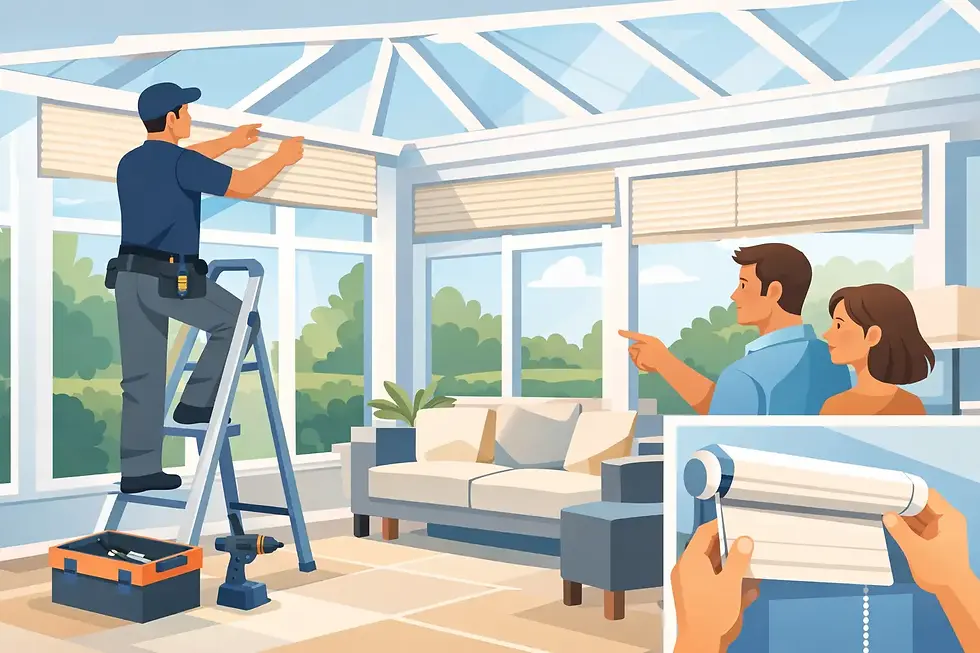
Professional fitting is still important. Conservatory roofs vary widely, and the sail needs to be tensioned and secured correctly for a clean, lasting result. A specialist service should make the process simple, from quotation and survey through to fitting, with clear information on timescales and guarantee cover.
Is a conservatory sail blind right for your room?
Sail blinds are an excellent fit for homeowners who are tired of excessive glare, want a more comfortable living space and prefer a clean alternative to costly roof blinds. They work well in conservatories used as lounges, dining rooms, playrooms, studios and home offices, as well as in workplace settings with glazed roof areas.
They are particularly appealing if you value a bespoke result but do not want an over-engineered system. You get tailored shade, a professional finish and the option to remove the fabric for cleaning, all without filling the roof with tracks and moving parts.
Before choosing any shading, be realistic about what your conservatory needs. If heat loss in winter is your main concern, insulated sail blinds may offer a better route than standard shading fabric. If summer overheating is extreme, combine internal roof shade with sensible ventilation, opening windows and doors where possible. Good shading works best as part of how the whole room is used.
A conservatory should not be a room reserved for cloudy days. The right made-to-measure sails can make it a calmer, more inviting part of the home - and a free quote is a straightforward first step towards finding the right balance of shade, style and value.


Comments