


Skylight Blinds Versus Fabric Sails Compared

A conservatory that becomes too bright or too warm can quickly turn into a room you avoid during the best part of the day. When comparing skylight blinds versus fabric sails, the right choice is not simply about blocking the sun. It is about making the space more comfortable, keeping the finish in keeping with your home and choosing a solution that feels worth the investment.
Traditional roof blinds and modern fabric sails approach the same problem in very different ways. One uses individual blind systems fitted within or beneath roof panels; the other uses purpose-made fabric sections stretched neatly across the roof area. Both can improve glare and light control, but their cost, appearance, maintenance and installation requirements can be quite different.
What are skylight blinds?
Skylight blinds are generally blinds made for roof windows, lanterns or glazed roof panels. In a conservatory, this often means pleated blinds fitted to each section of the roof. They may be manually operated, controlled by a pole or powered by a motor, depending on the height and complexity of the installation.
Their main appeal is precise control. Individual blinds can be opened or closed in particular areas, which may suit a room where sunlight only causes a problem at certain times of day. A conventional blind system can also create a more structured, tailored look, especially where the roof has regular, simple panels.
However, a conservatory roof can contain many sections, awkward angles and hard-to-reach areas. Once every panel needs its own made-to-measure blind, the overall cost can rise quickly. Cords, tracks, handles and moving parts also create more to maintain over time.
What are fabric sails for a conservatory roof?
Fabric sails are custom-made panels of specialist fabric, shaped to suit the roof and professionally tensioned into position. Rather than filling every glazed panel with a separate blind, they create a softer, calmer canopy below the glass.
They are particularly well suited to conservatories, where the aim is often to take the edge off harsh sun and glare across the whole room. The fabric diffuses light instead of leaving a patchwork of open and closed blinds overhead. This can make a bright room feel more settled while retaining a light, airy atmosphere.
A properly measured sail is not a one-size-fits-all product. The angles, fixings, fabric choice and positioning all need to work with the roof structure. That is why a survey and professional fitting matter: the finished result should look intentional, sit neatly and leave access where it is needed.
Skylight blinds versus fabric sails: the key differences
The most useful comparison is not about which product is universally better. It is about how you use your space, what you want it to look like and where you want to spend your budget.
Appearance and feel
Skylight blinds tend to emphasise the lines of the conservatory roof. Each blind follows an individual glazed section, which can look neat but busy where there are lots of panes. Fabric sails soften those lines, creating broader areas of shade and a more contemporary soft-furnishing feel.
For homeowners who feel their conservatory looks overly glazed, clinical or unfinished, sails can make a noticeable visual difference. They introduce texture and colour while helping the room feel more like part of the home. The fabric can be selected to complement existing décor rather than making the roof itself the dominant feature.
Heat, glare and light control
Both options can reduce uncomfortable glare. The exact level of heat reduction depends on the fabric, roof orientation, glazing and ventilation, so no shading system should be chosen on a single promise alone.
Pleated skylight blinds offer more sectional control. If you want to leave one roof panel uncovered and shade another, they are often the more flexible choice. This can be useful for a home office, a reading corner or a roof window where preserving a view of the sky is a priority.
Fabric sails are often the stronger choice when the room needs a broad, consistent layer of shade. They diffuse direct sunlight beneath the roof and can make a south-facing or west-facing conservatory more pleasant to sit in. Insulated conservatory sail blinds can also provide an additional barrier below the glass, helping the room feel less exposed to the extremes outside.
Cost and value
Cost is usually where the difference becomes most obvious. Conventional pleated roof blinds can be expensive because every panel requires its own bespoke blind, track and fitting arrangement. Complex roof shapes, motorisation and difficult access can add further cost.
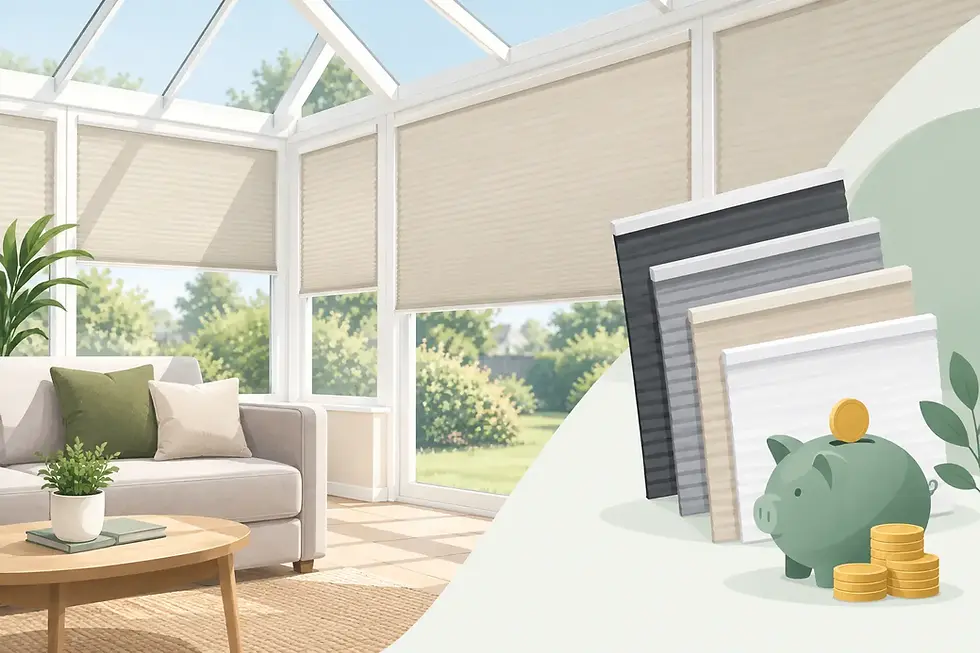
Fabric sails are typically a more affordable made-to-measure alternative. With fewer mechanical components and a different fitting method, a professionally installed sail system can often cost around half as much as traditional roof blinds. The final price will depend on the size and shape of the roof, the chosen fabric and the number of sails required, but the value case is clear for many conservatory owners.
Lower cost should not mean settling for an off-the-shelf look. The best results come from a solution designed around your own conservatory, with fabric and fixings chosen for the space rather than a standard size forced to fit.
Cleaning and everyday upkeep
Roof blinds can be difficult to clean thoroughly, especially on high or awkward roofs. Dust settles in pleats, and cleaning around cords and tracks can be fiddly. If a mechanism develops a fault, the affected blind may need specialist attention.
Fabric sails are designed for simpler maintenance. They can be removed when needed for cleaning, decorating or access to the roof, then refitted professionally or according to the system provided. Their smooth surfaces are generally easier to keep looking fresh than numerous pleated sections.
This is especially valuable in homes with pets, busy family life or a conservatory that is used every day. A shading solution should not create another time-consuming cleaning job.
Installation and reliability
Skylight blinds are mechanical products. Good-quality systems can perform well, but they involve more components and more points at which wear can occur. On a large conservatory roof, that can mean a lot of individual blinds to operate and maintain.
Fabric sails use a simpler approach. Once measured, manufactured and fitted, they remain neatly in place without daily adjustment. For households that want shade in place throughout the sunnier months, this straightforwardness is a real advantage.
That said, fixed sails will not suit everyone. If you regularly want fully open glass overhead, or need to adjust light levels several times a day, opening skylight blinds may better match your routine. It comes down to whether you value frequent control or a consistently comfortable room.
When fabric sails are likely to be the better fit
Fabric sails make particular sense when your conservatory is too hot, too glaring or visually harsh for much of the day. They are also a strong option when the roof is large, unusually shaped or divided into many panels, as the cost of conventional blinds can become difficult to justify.
They work well for homeowners who want a modern finish without motors, cords and individual blind controls. If you would rather improve the room once and enjoy it with little day-to-day effort, sails offer an attractive balance of practicality and style.
At Roof Sails, each conservatory sail blind is made to measure, professionally fitted and backed by a three-year guarantee on both product and fitting. A free quotation and survey make it easier to see what will work in your own space before making a decision.
When skylight blinds may still be right
Skylight blinds remain a sensible option for smaller roof windows, rooms that need highly adjustable shading or properties where each section of glass must be controlled separately. They can also suit homeowners who prefer the defined appearance of individual blinds and are comfortable with the higher cost and maintenance involved.
The key is to compare like for like. Ask whether the quotation includes measuring, fitting, fabric quality, access requirements, aftercare and guarantees. The cheapest initial figure is not always the best value if it does not provide a finish that lasts or solve the reason you wanted shade in the first place.
A well-shaded conservatory should still feel like a bright place to spend time, not a room closed off from the garden. Choosing the right solution starts with how you want that room to feel on a sunny afternoon - calm, comfortable and ready to use.


Comments