

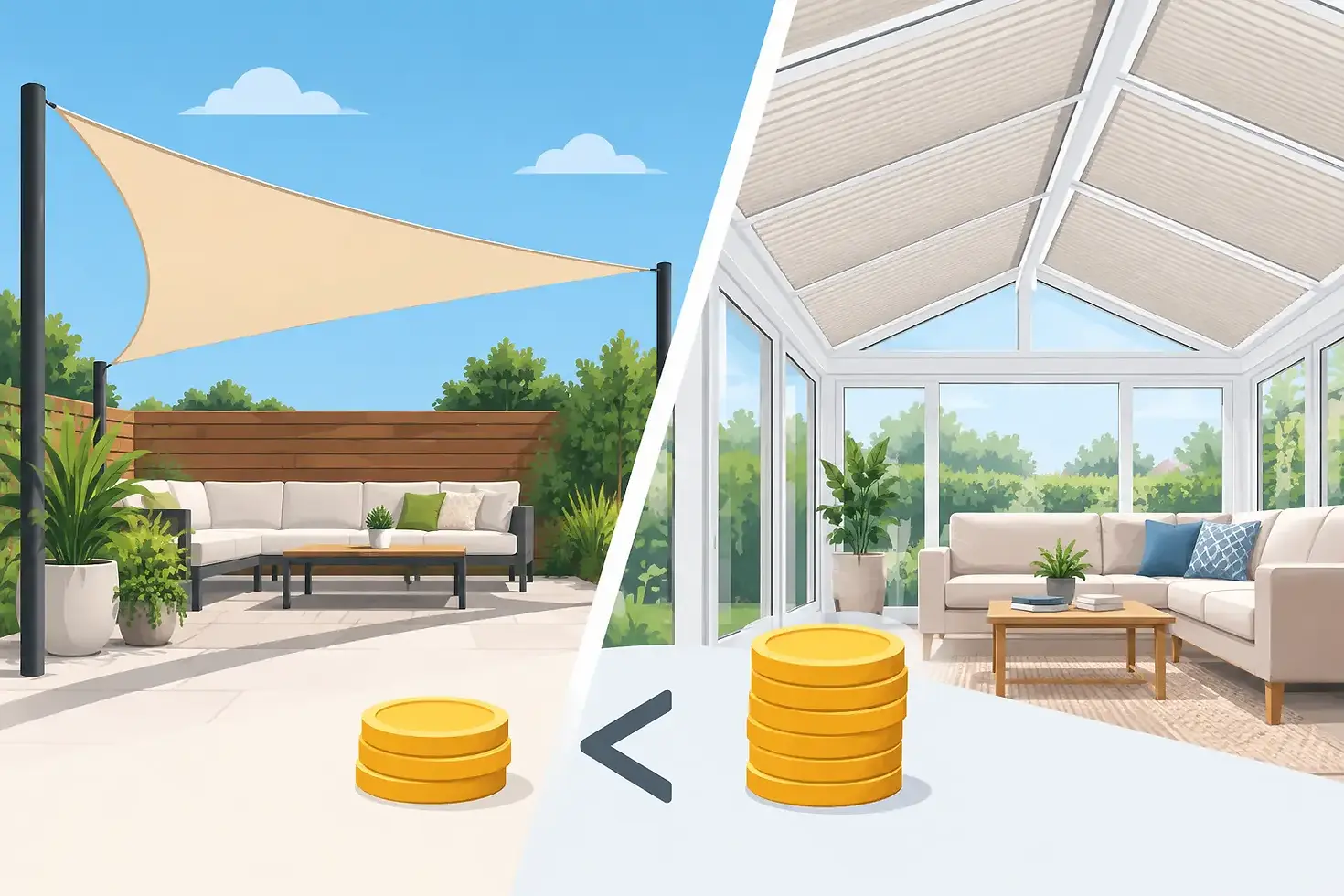
Why Sails Cost Less Than 1/2 Conservatory Roof Blinds

A conservatory can be the brightest room in the house, but that is not always a benefit. When the sun is high, glare on screens, uncomfortable heat and fading furnishings can quickly make it a room you avoid. The reason sails cost less than 1/2 conservatory roof blinds is not that they are a lesser solution. It comes down to a simpler, smarter design that delivers the shade you need without the expense of multiple moving blind systems.
For homeowners who want to make more of their conservatory without taking on a major project, made-to-measure sail blinds offer a practical, attractive alternative. They are designed around your roof, fitted professionally and made to complement the room rather than crowd it with mechanisms.
Why sails cost less than 1/2 conservatory roof blinds
Traditional pleated roof blinds are usually made up of separate blinds, tracks, cords, tensioned wires and operating components. On a conservatory roof with several panels, every section often needs its own made-to-measure blind and fixing system. The materials, labour and installation time add up quickly.
A conservatory sail takes a different approach. Rather than fitting a moving blind into every individual glazed panel, a tailored fabric sail is shaped to cover the area where shade is required. It is secured neatly in place, creating a clean, soft-furnishing finish across the roof space. Less hardware and fewer moving parts can mean a significantly lower overall cost.
For many layouts, this allows a bespoke sail solution to come in at roughly half the cost of conventional conservatory roof blinds. The exact figure will depend on the size, roof shape, access and fabric choice, so a proper survey and quotation are always the sensible way to compare options. But the saving is rooted in the system itself, not in cutting corners on fit or appearance.
A simpler design with fewer costly components
The biggest difference is what sits above your head. Pleated blinds are engineered systems. They need individual rails or wires, tensioning, operating controls and carefully aligned fittings. These can look tidy when new, but they are also the parts most likely to need adjustment or repair over time.
Sails rely on high-quality fabric and precise pattern making instead. Each one is measured for the shape and dimensions of the conservatory, then made to fit the space with a smooth, considered finish. There is no chain to pull, no collection of cords to manage and no bank of blinds to raise and lower one at a time.
This approach is particularly helpful in awkward spaces. Victorian, Edwardian, gable-ended and bespoke conservatories often have roof sections that are difficult or expensive to blind individually. A survey allows the sail design to work with those angles and features, creating shade where it will make the biggest difference.
Better value does not mean a one-size-fits-all finish
Cost matters, but most homeowners do not want the cheapest possible answer if it looks temporary or fails to deal with the heat. A made-to-measure conservatory sail is not an off-the-shelf sheet of fabric. The roof is surveyed, the fabric is chosen to suit the room and the finished sails are made specifically for the installation.
That tailored process matters visually. A well-designed sail can soften the hard lines of glass and frames, making a conservatory feel more like a comfortable extension of the home. Neutral tones can keep the space light and calm, while a stronger colour can bring warmth and character to a room that otherwise feels very plain.
It also matters practically. The right coverage, spacing and fabric choice can reduce harsh sunlight and glare while retaining a pleasant level of natural light. Your conservatory should not need to become dark in order to feel more comfortable.
The everyday benefits of fixed conservatory sails
One reason homeowners choose sails is that the day-to-day experience is refreshingly straightforward. Once fitted, they provide consistent overhead shading without needing to be adjusted whenever the weather changes. That is useful in a room used for reading, working, eating or relaxing, where direct sunlight can move across the space throughout the day.
They are also easy to remove and clean when needed. With no delicate pleats, cords or complicated track system to work around, maintenance is far less of a chore. This can be a real advantage in conservatories, where dust and insects have a habit of reaching places that are difficult to clean.
The lack of moving components has another benefit: fewer things that can wear, stick or fail. Any shading product needs to be looked after, but a simpler system removes some of the common frustrations associated with older roof blind installations.
When traditional roof blinds may still suit the room
Sails are not intended to be the right choice for every conservatory. If you need fully adjustable shade in each individual roof panel, or you want to open every blind completely to maximise the view of the sky, a conventional pleated system may be more suitable. Some homeowners simply prefer the look and operation of individual blinds, and that is a valid preference.
There are also situations where the main issue is not sunlight from above but low-level glare through the sides of the conservatory. In that case, vertical or side-window shading may need to form part of the solution.
However, if your priority is reducing overhead glare and making a hot, bright conservatory more comfortable at a sensible price, fixed sail blinds are often the more practical answer. They are especially well suited to people who want a polished result without adding a complicated system to the roof.
Insulated fabric can help with year-round comfort
Summer heat is often the first reason people enquire about conservatory shading, but it is not the only consideration. A conservatory roof can feel exposed during cooler months too. Insulated conservatory sail blinds can add a useful layer beneath the glazing, helping the room feel less harsh and more inviting across the seasons.
They are not a replacement for efficient glazing, heating or good ventilation, and it would be unrealistic to promise that fabric alone will transform a conservatory into a perfectly temperature-controlled room. What they can do is reduce the direct impact of the glass roof and make the environment more comfortable to use.
The right choice depends on how you use the space. A conservatory used mainly on sunny afternoons may call for a lighter shading fabric. A room used as an office, dining area or family space through much of the year may benefit from an insulated option. A specialist survey helps turn that decision into one based on your room rather than a guess from a photograph.
Professional fitting protects the finished look
A made-to-measure product only works properly when it is fitted with care. Roof lines are rarely as simple as they appear, and a conservatory can have vents, beams, fan lights and unusual angles that need to be accounted for. Accurate measuring ensures the sails sit neatly and provide useful coverage without interfering with the features of the roof.
Professional fitting also saves homeowners from trying to work at height or make permanent fixings without knowing what lies behind the frame. The finished result should look intentional from every angle, with secure fittings and fabric tension that complements the room.
At Roof Sails, the service is built around that complete process: survey, bespoke manufacture and fitting, with free quotations and fitting included. A three-year guarantee on both product and fitting provides further reassurance that the solution is designed to last, not simply to solve one summer's problem.
What to ask when comparing quotes
The lowest headline price is not always the best value. When comparing conservatory shading options, ask whether the price includes a survey, made-to-measure manufacture, fitting and any aftercare or guarantee. It is also worth checking whether you are comparing like for like: a quote for multiple operated pleated blinds is a very different system from a set of tailored fixed sails.
Think about the result you want to live with, too. Do you need daily adjustment, or would reliable overhead shade be more useful? Is your priority maximum darkness, softer light, insulation or simply making the room feel less exposed? Clear answers make it easier to choose a solution that suits both your conservatory and your budget.
A comfortable conservatory should be somewhere you choose to spend time, not a room dictated by the weather. If expensive roof blinds have put the project on hold, a bespoke sail may be the straightforward, good-looking way to bring the room back into everyday use.


Comments